Dried Mango.
Mangifera indica.
The king of tropical fruits in concentrated form. From 4,000 years of cultivation in India to a 200,000-ton export market. When mango is dried, the sun stays inside.
Botany and Origin of the Mango Tree
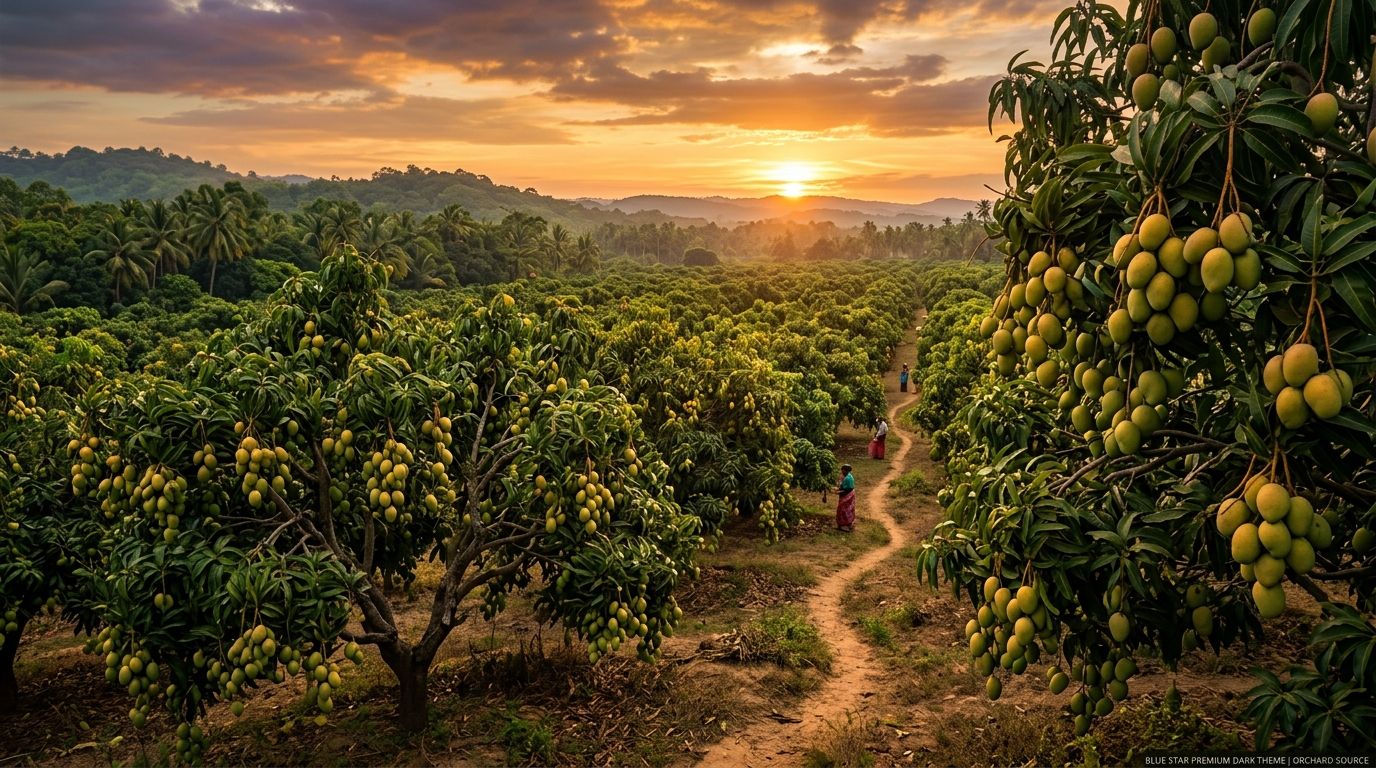
Mango (Mangifera indica) originates in northeast India and Myanmar, a region where it grew wild as far back as 25–30 million years ago according to fossil finds. Its cultivation in India was documented 4,000 years ago, in the Vedic texts. Buddha himself received a mango grove as a gift for rest and meditation. Mango trees were planted along the trade routes of the Ashoka kingdoms in the 3rd century BCE. The fruit reached Persia and East Africa via the Mediterranean trade routes, and Latin America with the Portuguese in the 16th century.
India was and remains the heart of the mango world. More than 1,000 varieties are recognized in India alone, the most famous being Alphonso, Kesar, Dasheri and Langra. Each with a unique season, texture and flavor. The Alphonso, "Hapus" in its native name, is considered one of the tastiest premium fruits in the world and is sold in the markets of Britain, the Gulf and Singapore at luxury prices.
Drying is an ancient preservation mechanism that predated frozen export. In India, sun-dried mango slices as Amchur, a sour green mango powder, have been in Indian cuisine for centuries. Modern industrial drying created a completely different product: sweet, deep-orange slices, with a flavor concentration that fresh mango cannot achieve.
India produces 45% of the world's mango but exports less than 1% of it. Most of the fruit is eaten fresh within India, while the amount that reaches drying and export represents the margins of a huge market that is almost invisible from outside.
Growing Regions: Philippines, Thailand and India
The global dried mango market amounts to about 180,000–220,000 tons a year, a small market relative to the total mango sector of 55 million tons fresh. Three countries dominate export: the Philippines, Thailand and Mexico. India produces the most mango in the world but exports little dried, because domestic Indian demand is enormous and fresh premium prices are high enough.
The Philippines leads thanks to the Carabao variety (Philippine Mango), considered by many one of the sweetest mangoes in the world. It dries to a distinctive bright golden-yellow color with an especially high natural sugar content. Thailand leads with the Nam Dok Mai variety, with a delicate flavor and floral aroma. Mexico mainly supplies the American market with the Ataulfo variety.
| Country | Exports (tons) | Main variety | Target market |
|---|---|---|---|
| Philippines | 55,000 | Carabao | Japan, Korea, EU, US |
| Thailand | 40,000 | Nam Dok Mai | China, Japan, EU |
| Mexico | 33,000 | Ataulfo, Tommy Atkins | US, Canada |
| India | 22,000 | Alphonso, Kesar | UK, Middle East |
| Peru | 15,000 | Kent, Tommy Atkins | EU, US |
Dried mango is one of the fastest-growing dried fruits in Israel. Most imports come from Thailand and the Philippines, with a growing entry of Peru and Mexico. Retail price: ₪50–80 per kg depending on origin and quality. The trail-mix market and the health market are the drivers.
Natural, Sweetened and SO₂: The Three Dried Mango Profiles
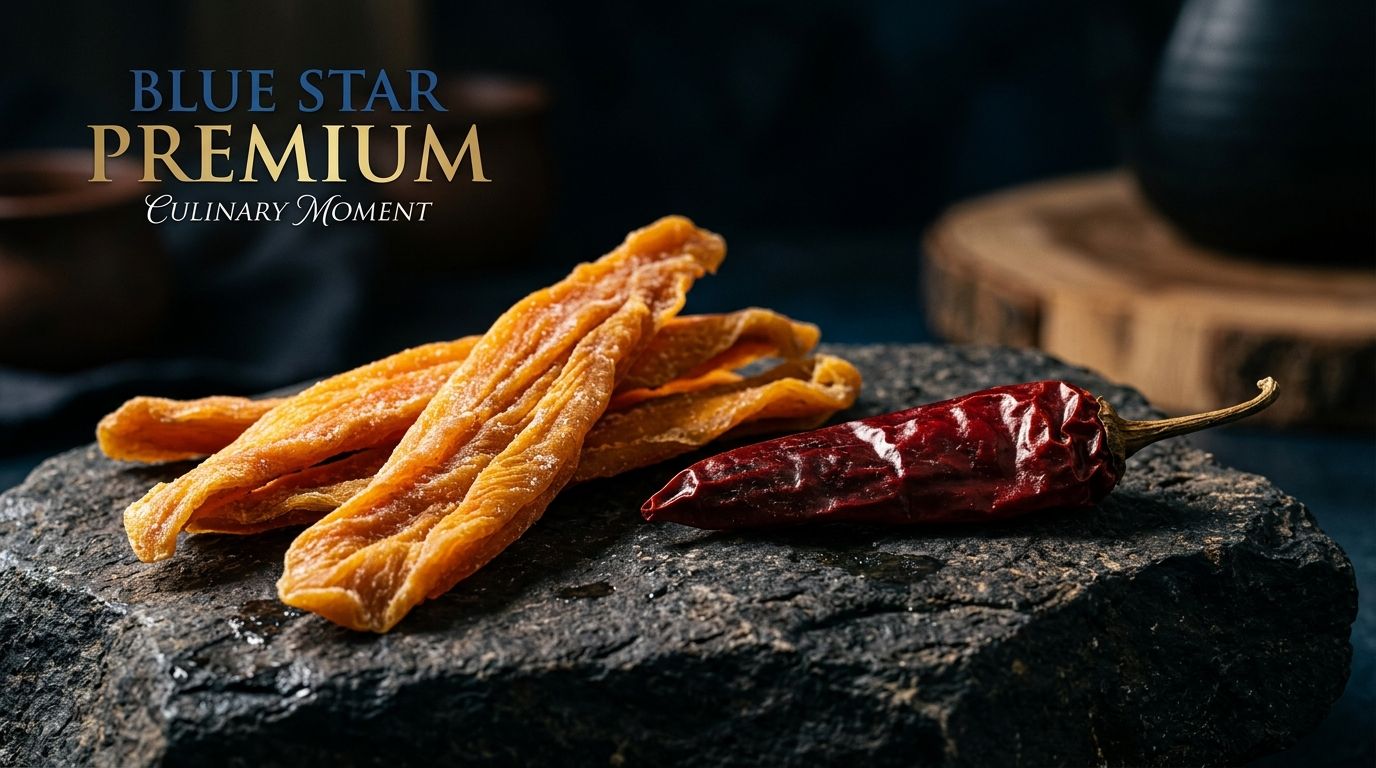
Dried mango comes in three main profiles that confuse consumers: natural with no additives, sweetened with sugar before drying, and sugared with SO₂ to preserve color. The difference between the three is money, color, flavor and calories. "Natural" mango already contains 60–65 grams of sugar per 100 grams due to the natural sugar concentration in the drying process. Sweetened mango contains 70–80 grams. The difference matters to consumers managing sugar intake.
SO₂, sulfur dioxide, preserves the bright-orange color that sells better. Mango without SO₂ darkens to a deep brown-orange, a fuller flavor, less aesthetic in retailers' eyes. The clean-label audience prefers the dark, SO₂-free version. Both are legitimate.
SO₂ above 10 ppm requires labeling in the EU and Israel. People with asthma or a sulfite allergy (1–2% of the population) should check the label before consuming. Rule of thumb: a bright, glossy orange mango probably contains SO₂. A deep brown-orange mango is probably clean.
Organic dried mango comes mainly from India and Peru. A premium of 30–50% over conventional. Organic mango cultivation is limited because mango trees are sensitive to pests. In India, some Alphonso crops are not actually sprayed (traditional farming) but are not officially organic-certified.
Processing: From Ripe Fruit to Packed Slices
Leading Dried Mango Varieties: Carabao, Nam Dok Mai, Ataulfo and Alphonso
The dried mango market is not monolithic. Philippine Carabao, Thai Nam Dok Mai and Indian Alphonso are three different products in flavor, color, texture and price. The consumer who knows the differences buys differently from the consumer who sees only "dried mango."
Bright golden-yellow, very sweet with minimal acidity. Sugar content in fresh fruit: 19–22 Brix, among the highest in the world. The dried version: yellow-orange, soft, a delicate almost buttery texture. Markets: Japan, Korea, US, EU. Often labeled "Philippine Dried Mango" as a brand. FOB price: $3,500–4,500 per ton.
Yellow-greenish when fresh, sweet with a delicate floral aroma and less acidity than Carabao. The dried version: orange-yellow, less sweet, a more complex flavor. Large export to China, Japan, EU. Usually without SO₂ in the premium market. FOB price: $2,800–3,500 per ton.
Small, yellow, with very little fiber, an almost creamy texture. Dried: deep-orange, sweet, a chewy texture. Sugar is usually added in processing. Main market: US, Canada. Competitive price: $2,200–2,800 FOB. The common version in commercial trail mix.
Alphonso is considered one of the world's premium mangoes. The dried version: deep-orange, a rich flavor with a distinctive floral note. Export is limited, almost all the fruit stays in India. What is exported comes with a protected GI Tag. Markets: UK, UAE, Singapore. Price: a high premium.
Philippine Carabao Dried Mango FOB Manila: $3,500–4,500 per ton. Thai Nam Dok Mai FOB Bangkok: $2,800–3,500 per ton. Mexican Ataulfo FOB Manzanillo: $2,200–2,800 per ton. Peruvian Kent FOB Paita: $2,000–2,600 per ton. Organic premium: 30–50% over conventional.
Nutritional Values: Beta-Carotene, Sugars and Mangiferin
Dried mango is a concentration. Fresh fruit contains 15% sugar and 83% water. After drying, the sugar is concentrated to 60–70%. The vitamins: vitamin C drops by about 40–60% in heat drying. Beta-carotene, which converts to vitamin A, is heat-stable and remains at a high concentration. The deep-orange color of dried mango is literally beta-carotene density. A higher concentration, a darker color.
| Nutrient | 100g dried | 100g fresh | % DV (dried) |
|---|---|---|---|
| Calories | 319 kcal | 60 kcal | 16% |
| Sugars | 66.3g | 13.7g | |
| Fiber | 3.0g | 1.6g | 11% |
| Vitamin A (beta-carotene) | 1,262μg RAE | 54μg RAE | 142% |
| Vitamin C | 23mg | 36.4mg | 26% |
| Vitamin B6 | 0.15mg | 0.12mg | 9% |
| Vitamin K | 5.4μg | 4.2μg | 5% |
| Potassium | 279mg | 168mg | 6% |
| Copper | 0.18mg | 0.11mg | 20% |
| Protein | 2.45g | 0.82g | 5% |
100 grams of dried mango provide 142% of the daily intake of vitamin A in the form of beta-carotene. Beta-carotene is an antioxidant that protects against ROS, linked to eye, skin and immune-system health. Unlike preformed vitamin A (retinol), the body converts beta-carotene only as needed and there is no risk of toxicity from excess intake. The orange color is the direct measure: darker, more beta-carotene.
Mango contains Mangiferin, a unique polyphenol found mainly in the fruit and leaves of the mango tree. Preliminary studies show anti-inflammatory and antiviral activity in vitro and in animal models. Mangiferin is heat-stable and preserved in the drying process. There is not yet a sufficiently large human RCT for drug-level claims, but the initial data are promising.
Culinary Uses and Market Segments: From Granola to Amchur
Dried mango is an ingredient with two natures: sweet and exotic. The concentrated tropical flavor works well when you need to add character to something neutral, oats, cheese, chicken, salad. The trick: the flavor concentration is higher than fresh, but the fruit is not "heavy" like date or prune. It adds light, not depth.
Cuisine
Granola and muesli: added at the end of baking and not inside the oven to prevent burning. Salads: crispy chicken with mango, avocado and lemon. Cheese board: dried mango with brie and macadamia nuts. Curry: dried mango slices add sweetness to a spicy Indian curry and balance the heat. Chutney: dried mango as a base with ginger, vinegar and chili.
Amchur, Green Mango Powder
Green mango, before ripeness, dried and ground into powder. Flavor: sour-fruity, tenderizes meat and adds acidity without liquid. A must in Chaat Masala, in Dal and in Indian vegetarian marinades. Market: the global Indian community, growing fast. Amchur is completely different from sweet dried mango.
The Food Industry
Dried mango is ground into Mango Powder for the beverage, ice cream and bakery industries. Freeze-Dried Mango Powder retains 95% of the nutritional profile and costs 3–4 times more than regular dried. Mango Fruit Leather: fruit rolled and dried into sheets, a large children's market in the US and Europe. Mango Concentrate: for the juice and dairy industries.
Mango grows in Israel in the Jordan Valley, the Arava and the Sharon. Local varieties: Maya, Shelly, Keitt, Tommy Atkins. Season: July–September. Drying local Israeli mango is a small, growing niche. A premium on "Israeli dried mango" is possible in the local market. Export hardly exists.
Botany of the Mango Tree: Anacardiaceae, Embryony and Flowering Seasons
Mangifera indica is a tropical tree of the Anacardiaceae family, the same family as cashew and pistachio. A mature mango tree reaches 30–40 meters in the wild and 5–10 meters in managed cultivation. Tree life: 300+ years. 100-year-old mango trees in India are still in full commercial production. Start of full bearing: years 3–5 from graft.
The mango is divided into two genetic types: Monoembryonic, like the Indian Alphonso and Kesar, which require grafting to guarantee the variety, and Polyembryonic, like the Philippine Carabao and Thai Nam Dok Mai, which can be grown from seed and produce a tree identical to the parent. This explains why growing Carabao in the Philippines is easier to scale than growing Alphonso in India.
The mango tree flowers once a year, usually in winter-spring, and bears in summer. In India: flowering December–January, harvest March–June by variety. In the Philippines: January–May. In Mexico: March–September. In Israel: July–September. Importing exploits opposite seasons to supply year-round.
Mango belongs to the Anacardiaceae family, the same family as cashew, pistachio and poison ivy. The peel and tree of the mango contain Urushiol, the substance that causes a skin reaction from poison ivy. The mango fruit itself contains Urushiol at a low concentration mainly in the peel. In drying, the peel is removed, which greatly reduces the risk. People allergic to cashew or pistachio are advised to try a small amount first.
Storage, Shelf Life and Quality Identification
Dried mango, with a high sugar content and a moisture of 14–18%, is relatively stable but vulnerable to external moisture. The sugar draws water from the air, which softens the fruit and causes sticking and ultimately mold. Airtight packaging, low temperature and darkness are the three rules.
| Product | Storage | Shelf life | Risk |
|---|---|---|---|
| Dried mango, sealed | Cool warehouse, <20°C | 12–18 months | External moisture |
| Dried mango, opened | Refrigerator, sealed | 6 months | Mold, smell |
| Dried mango, freezer | -18°C | 24 months | Slight texture change |
| Amchur powder | Cool, dry warehouse | 12 months | Moisture forms clumps |
| Freeze-dried mango | Cool, sealed warehouse | 24 months | Very brittle |
Identifying Quality Dried Mango
Color: uniform orange-tan. White spots indicate mold. Too burnt-dark indicates over-drying. Texture: under light pressure the fruit should give. Hard as wood means over-drying and/or an old product. Smell: sweet-tropical fruity. A sour fermentation smell: reject. Stickiness: slight stickiness between slices is normal. A sticky clump means too-high moisture.
Summary and Dried Mango Importing Services by Blue Star
Dried mango made a 30-year journey from "an expensive exotic fruit" to "a standard granola ingredient." That journey did not happen because the fruit changed, it happened because the supply chain changed. The Philippines and Thailand built global drying and packing infrastructure. Air-freight prices fell. Trail mix became a global category. And mango, with the orange color you cannot miss and a flavor that needs no explanation, was the tropical ingredient that fit every product profile.
In 2025, the market is undergoing a second change: Freeze-Dried Mango Chunks, with a crisp-crunchy texture completely different from regular dried, are reaching supermarkets. A price three times higher, but the health niche market pays. Indian dried Alphonso reaches Europe under GI. Organic Mango Powder enters the premium smoothie market.
A tree that grew 25 million years in the mountains of Myanmar, a fruit Buddha loved, a slice dried in the Philippines and reaching granola in Tel Aviv. This is not a supply chain, it is a direct line from the distant past to the shelf of 2025.
How to Buy
For the best flavor: Philippine Carabao, marked on the package, yellow-orange, soft. For budget: Thai or Mexican, very good. For a gastronomic niche: Indian Alphonso Dried, if you can find it. Check SO₂ on the label if there is sensitivity. Organic: mainly from India and Peru, a 30–50% premium.
How to Store
An opened pack: refrigerator, zip-lock bag, six months. A sealed pack: a cool warehouse up to 18°C, up to 18 months. Freezer: up to two years. Before use in cooking: 10 minutes of soaking in hot water revives the slices for a dish.
Interested in this product?
Send a message directly to Blue Star with the commodity details, and we'll get back to you within an hour during business hours.