Dried Fig.
Ficus carica.
The sacred fruit named in the Bible before the grape, which healed kings and nourished prophets, and today arrives in two colors from countries that do not speak to one another.
Botany and Origin of the Fig Tree
In 701 BCE, when Sennacherib king of Assyria besieged Jerusalem, King Hezekiah fell ill with a malignant boil his physicians could not heal. The prophet Isaiah, according to 2 Kings 20, instructed: "Take a cake of figs." A cake of pressed dried figs was applied to the boil. The king recovered. This is not just legend. Assyrian ships excavated at Nineveh carried fig cakes as travel food and as medicine. Dried fig was a marker remedy in every ancient medicine of the Middle East, Egypt, Greece and Rome.
The fig, Ficus carica, is one of the seven species named in the Torah: "a land of wheat and barley, of vines and fig trees and pomegranates, a land of olive oil and honey." Archaeology confirms it: dried figs were found in Jericho dating back 11,400 years, making them one of the oldest domesticated foods discovered. In ancient Greece the fig was protected by law: the export of fresh figs from Attica was banned, because the distance between tree and market caused the fruit to rot on the way. The only solution: drying. What was banned for fresh export went out dried to every corner of the Mediterranean.
Rome received the fig from Greece and was unwilling to give it up. Cato the Elder, in his work De Agri Cultura from 160 BCE, included a recipe for storing dried figs that looks identical to the traditional Turkish storage method to this day. Twenty-two centuries between the two instructions, and the same method. The dried fig is one of the things humans have done the same way since they had cities.
A fruit named in the Torah, that healed kings, and reached the Romans' table, is still in 2025 looking for the trader who will tell its story right.
Growing Regions: Turkey, Iran and Greece
The dried fig market is unusually concentrated. Two countries together control more than 70% of global volume, and the competition between them affects prices directly.
Turkey, mainly the Izmir and Aegean region, produces the global standard: Sarılop, Bursa Siyahı, and white Sarılop. Quality production, QC that meets EU standards, and a developed export infrastructure. Iran produces a larger volume than people think, mainly from the Estahban region, but sanctions limit direct export to Western markets. Iranian fig usually arrives via intermediaries, with pricing that reflects the risk.
When sanctions on Iran tighten, Iranian fig disappears from the market and the Turkish price rises 15–20%. When sanctions ease, Iranian volume returns via the UAE and Georgia. A trader who follows OFAC policy can time an early purchase from Turkey at a moment most competitors miss.
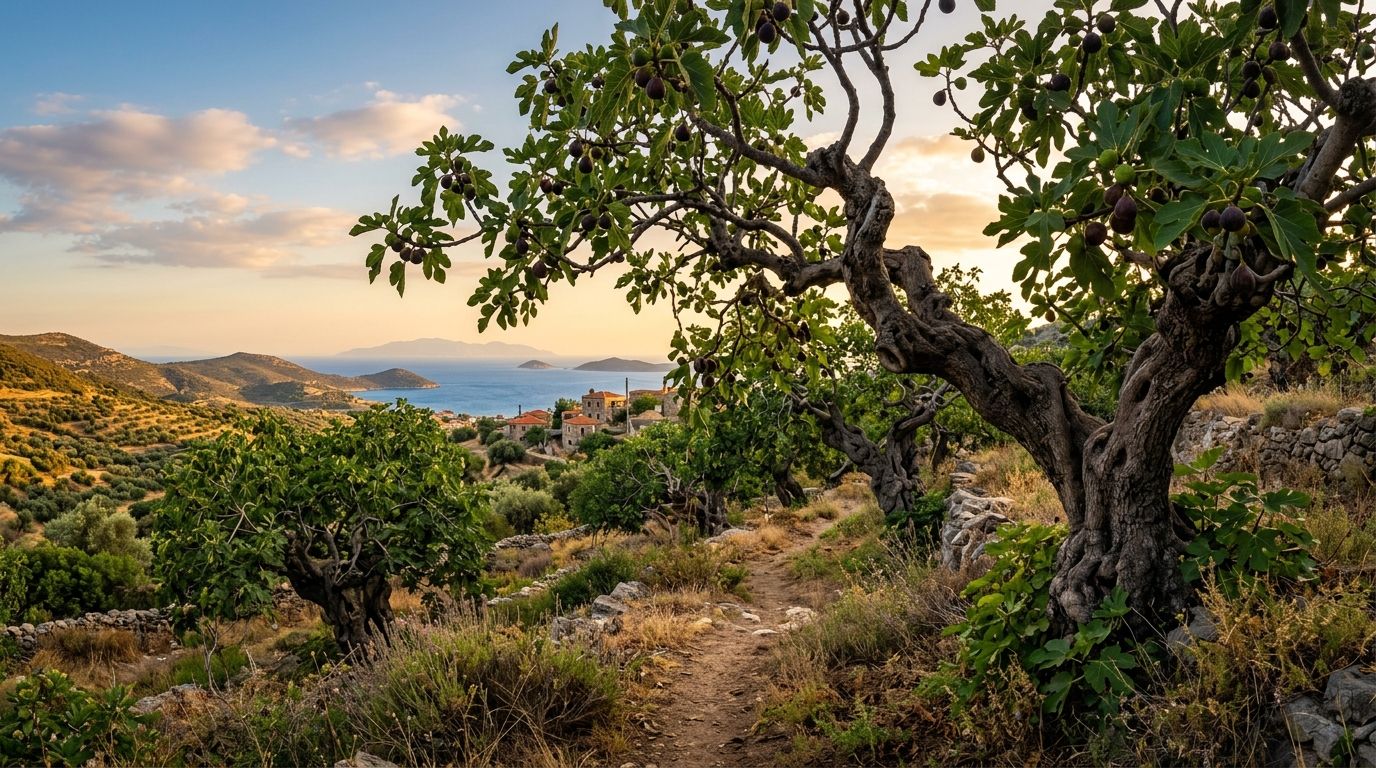
The Izmir Story: How a Supply Chain Is Lost
In September 1922, at the end of the Greco-Turkish war, Izmir burned in a fire that killed tens of thousands and expelled hundreds of thousands. The Greek and Armenian quarters that were the commercial center of the city, including the great market where dried fig had been sold for centuries, turned to ash within 72 hours.
Before the fire, the Greeks and Armenians who lived in Izmir controlled the fig trade chain: cultivation, processing, export. About 40% of the farmers who grew figs in the region were Greek. Following the fire and the 1923 population exchange, they were expelled to Greece. The Turks who remained, and those received in exchange from Greece, did not know how to grow figs. The following years of production were a catastrophe.
In the 1930s, Atatürk's government sent agronomists to the region to rehabilitate the fig trees and train new farmers. The process took 15 years. By 1950 production returned to 1920 levels. The lesson: an agricultural production chain that rests on human knowledge that has been erased does not recover quickly. A supplier with no continuity of knowledge is a supplier you cannot build on.
The crisis of 1922–1935 also taught a geographic lesson: Turkish fig export moved from the ports of Izmir to one central hub. The Izmir Cooperative, founded in 1938, still concentrates about 70% of Turkish fig export to this day. This cooperative monopoly keeps prices stable but also prevents one-sided price manipulation by individual suppliers. A trader who understands the structure of the Turkish cooperative understands why the Turkish fig price does not spike in bubbles the way olive oil does.
A fire that erased a production chain took 15 years to rebuild. Agricultural knowledge is not a product you can import with the next shipment.
Varieties: White, Black and Beyond
The dried fig has one distinction that governs the entire sales conversation: color. White (blond) versus black (purple). Two products for two partly overlapping markets.
The dominant variety in Turkish export. Ripens to a yellow-beige color with a pink-gold interior flesh. High sweetness, a relatively soft and moist texture, a perfumed aroma. 90% of Izmir's bulk export. Sold to the EU, the US and Israel. The standard most customers know.
A black-purple fig with intense dark-red flesh. A deep, complex flavor, less sweet than Sarılop, with notes of wine and date. A smaller production volume. A price 30–50% above white. The gourmet market, chocolatiers, and gift packaging. A customer looking for a "special" fig is not looking for Sarılop.
A Californian version of the Turkish Sarılop variety. Larger, slightly less sweet, a firmer texture after drying. Preferred in the American baking industry because of a uniform size and a texture that holds up in baking. A higher price than the Turkish, limited volume.
From the Estahban region of Persia. Extreme sweetness with an above-average sugar concentration. A drier texture than the Turkish. A price 20–30% lower than the Turkish, but direct export is limited by sanctions. It reaches the market via intermediaries. Quality can be high, but lot-to-lot consistency is lower.
Nutritional Values and Health Benefits
The dried fig is the best plant source of calcium among all dried fruits. A figure most traders do not know and do not exploit.
162 milligrams of calcium per 100 grams. Dried almond contains 264mg, but almond is not known as a "fruit." Among dried fruits, fig is first on the calcium list. This is a figure that opens a conversation with nutritionists, with dairy-free brands, and with the vegetarian market looking for non-dairy calcium sources.
| Parameter | Dried Fig | Dried Apricot | Prune |
|---|---|---|---|
| Calcium mg / 100g | 162 | 55 | 43 |
| Fiber g / 100g | 9.8 | 7.3 | 7.1 |
| Iron mg / 100g | 2.0 | 2.7 | 0.9 |
| Calories / 100g | 249 | 241 | 240 |
| Average FOB $/kg | 2.50–5.50 | 2.50–5.00 | 2.00–4.00 |
A fig with a COA stating 162mg+ calcium per 100g is a product that enters the conversation with dairy-free, plant-based and bone-health customers. EFSA (the EU food authority) approves a health claim for calcium and bone health. A product sold with an approved EU health claim is worth $1–2/kg more than a "fig." A change of conversation, not a change of product.
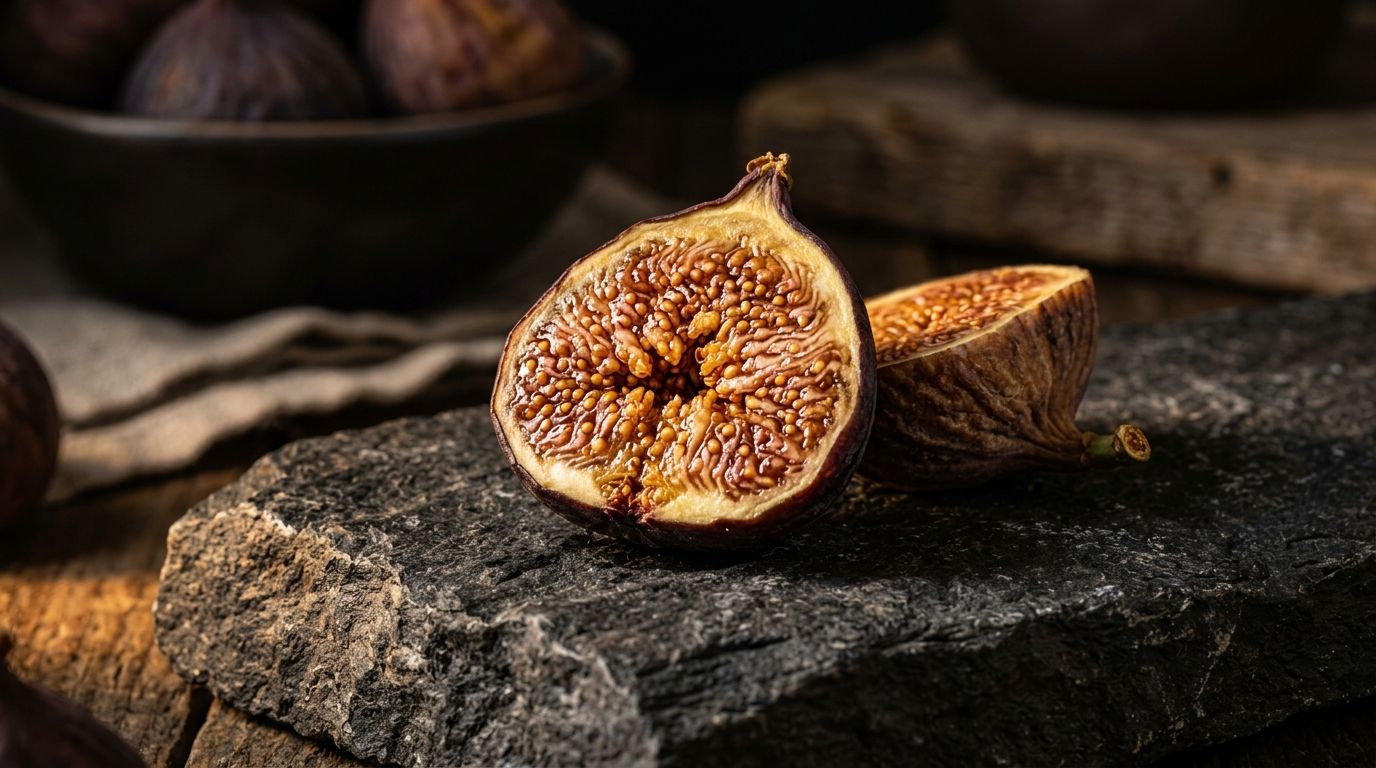
Processing, Sorting and Packing Dried Figs
Processing dried figs combines natural drying with manual processing stages that cannot be replaced. Understanding the chain explains why QC variability is higher than for most dried fruits.
A dried fig with moisture above 23% attracts Plodia interpunctella, a common storage insect. The first batch that arrives clean can be infested after three months of improper storage. A warm warehouse, relative humidity above 65%. Check storage and review the production date. A microbiological COA does not replace a visual check of a sample bag.
Market Segments: From Snack to Bakery
The dried fig is a product with a very strong historical anchor in several cultures. It is not a "new" product in the market, it is a product with roots, and you can build on them.
The Retail Snacking Market
Whole figs in a bag, layer figs in a box. The Israeli, German and British consumer knows the fig as a direct snack. Jumbo layers in a decorated box: the gift market. Here size, aesthetics and packaging are decisive. Large white Sarılop in a wooden box: a fig that sells itself.
The Baking Industry
Diced and block. Cakes, breads, biscuits. Fig Newton, LÄRABAR, most energy-bar brands. Here a 10–12kg block is the common format. Uniformity, Brix and moisture are critical. Bulk purchasing, low price, thin margins. A market that is not a place to innovate, it is a place for reliability.
Functional Food and Health
Organic unsulfured fig with a calcium claim. The vegetarian and dairy-free market seeking bone health. Premium brands like Made in Nature, Bare, Sunsweet. A COA with calcium analysis combined with an EFSA health claim means a completely different conversation. A 30–50% premium on whole organic.
The Gourmet Market
Black fig, Bursa Siyahı, chocolate, cheese. Black fig with goat cheese: a gourmet table. Dark-chocolate-coated dried fig: a chocolatier. Gift packs in wooden boxes for the holidays. High price, small volume, high margin.
The Fig Paste Industry
Fig ground into paste for confectionery, cookies and filling. Fig Newton paste is fig paste. Morocco supplies a significant share, thanks to its export tradition to the EU. Price: $1.50–3.00/kg FOB, large volume.
The dried fig is the product you can sell to a health shop at $8/kg and to a biscuit factory at $2.50/kg. The difference is not the product. The difference is which table you sit at.
Growing the Fig Tree: Drought Resistance, Caprification and Tree Cycle
The fig tree is one of the most economical plants in fruit agriculture. Understanding its requirements explains why it survived thousands of years without technological improvement.
Heat and Drought Resistance
A mature fig tree resists prolonged drought: its roots go deep into the soil and find groundwater. Regions like Estahban in Iran, which receive annual rainfall of only 200–300mm (Jerusalem gets 550mm), grow figs without irrigation. This explains why the fig is found across all Mediterranean regions without irrigation infrastructure.
Caprifig and Caprification
Most commercial fig varieties require pollination by an insect, Blastophaga psenes, which lives in the wild fig (caprifig). Turkish farmers hang caprifig branches on Sarılop trees during the flowering season. Without pollination: small, empty, worthless fruit. This is one of the oldest known symbioses between an insect and a plant, documented by Aristotle in 350 BCE.
In a year when caprifig blooming is later than usual due to a cold winter, pollination partly fails. The result: a smaller crop with a higher percentage of empty figs. Check the spring conditions each year with your Turkish supplier. TUIK (the Turkish statistics office) publishes the fig crop in July, three months before the stock reaches port.
Tree Cycle
A fig tree bears from age 3–5. Peak production: 10–30 years. Reasonable production: up to 80–100 years. Older trees produce smaller but deeper-flavored fruit. Some Izmir farmers take pride in trees 50–70 years old. They deliver a flavor intensity that cannot be replicated in a new sapling.
Quality Specifications and Storage Parameters
A dried fig with too much moisture is a fig waiting for fungus. With too little moisture, it is hard as a rock. The correct range is relatively narrow.
| Parameter | Accepted value | Note |
|---|---|---|
| Moisture content | 18–23% | Above 25%: mold. Below 16%: too hard |
| Water Activity (Aw) | 0.60–0.70 | Above 0.75: biological risk |
| Brix | 58–70°Bx | Below 55: a ripeness defect |
| SO₂ residue | up to 500 ppm (EU) | Lower than apricot, check by market |
| Yeast & Mold | below 100 CFU/g | Fig is sensitive to mold |
| Aflatoxin | below 4 ppb (EU) | Mandatory testing, independent lab |
| E. Coli | Negative | Mandatory |
| Size (whole) | by grade: XL/L/M/S | Uniformity sets price |
Storage
0–5°C, relative humidity 55–65%. Shelf life: 12–18 months. At room temperature (up to 20°C): 6–9 months. Figs pressed together in warm storage develop fermentation: a sour, slightly alcoholic smell. This is not necessarily dangerous, but it is certainly unappealing. Check the smell on receipt of each batch before signing documents.
Summary and Dried Fig Importing Services by Blue Star
The dried fig is a product with a relatively low FOB price for the category, but with well-defined premium potential for those who aim correctly.
| Product | FOB ($/kg) | Note |
|---|---|---|
| Whole, Sarılop, conventional | 2.50 – 4.50 | Izmir, bulk 10kg |
| Whole, organic/unsulfured | 4.50 – 7.50 | Health, EU organic |
| Layer figs, jumbo | 4.00 – 7.00 | Gift market, wooden boxes |
| Black fig (Bursa Siyahı) | 5.00 – 9.00 | Gourmet, chocolate |
| Block / diced, conventional | 1.80 – 3.00 | Baking industry |
| Fig paste | 1.50 – 3.00 | Industrial filling |
| California Calimyrna | 5.00 – 8.00 | Limited volume, premium |
Seasonality
Turkish harvest: August–September. New stock reaches ports in October–November. Prices tend to fall in November–December as the new stock arrives. Price peak: June–July, before the harvest. A supplier who bought at the November low and sold in June earned a 20–30% margin with no improvement to the product.
Five points for the trader:
1. The aflatoxin certificate is the EU gate. Fig is known to be prone to aflatoxin in improper storage conditions. The EU tests. Without a certificate from SGS, Eurofins or Intertek, the goods are held at port.
2. Moisture of 23%+ is a fig at risk. Check the moisture content of every lot. A supplier who cannot confirm exact moisture in writing is a supplier not in control of their own process.
3. Black fig is $2–4/kg higher than Sarılop for the right customer. A chocolatier looking for "something special" who has not heard of Bursa Siyahı simply has not heard, because no one told them. A 5-minute conversation that changes a deal.
4. Follow TUIK in July. Turkish fig crop figures are published in July–August. A low crop means a rising price as the stock arrives. Three months of advance warning that confer an advantage.
5. The calcium health claim is entry to a new market. A COA with 160mg+ calcium per 100g together with an EFSA-approved claim lets you enter the conversation with EU chains on health products. You do not need to be organic for this. Just documentation.
The dried fig is the product forgotten between prune and apricot on the dried-fruit lists. It does not have the story of the almond, it does not have the antioxidant buzz of the blueberry, and it does not have the superfood label of the goji. What it has: high calcium that can be documented, a history of thousands of years that can be told, and a black fig sold to chocolatiers at $8/kg. With three purchases in the right market, the fig changes league.
Hezekiah healed a boil with a cake of figs. A trader who knows how to tell that in a sales conversation is solving a completely different problem.
Interested in this product?
Send a message directly to Blue Star with the commodity details, and we'll get back to you within an hour during business hours.