Millet
An ancient grain of Africa and Asia. Gluten-free, drought-resistant, nutritious. One of the oldest crops.
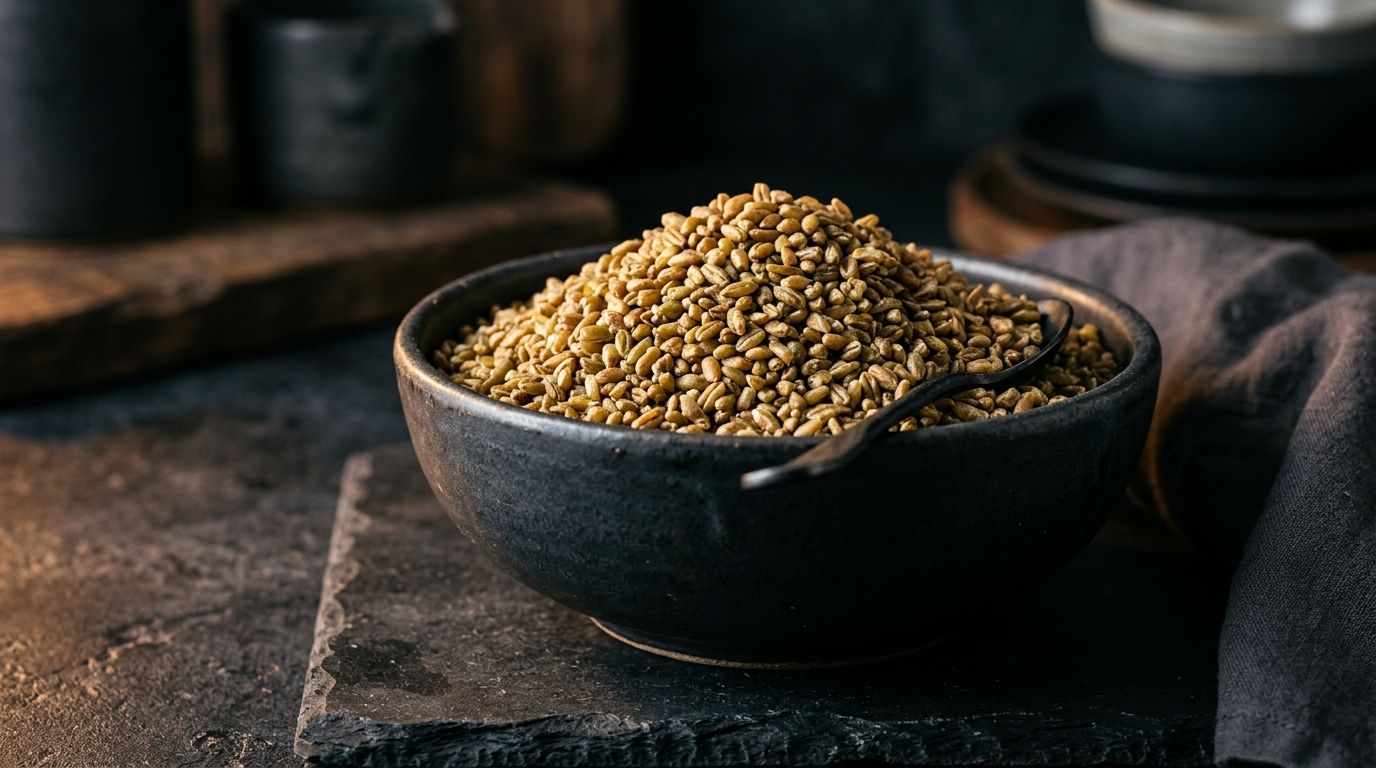
The survivor grain: 10,000 years and 12 species
Millet is a collective name for a group of 12 different species of small-grained cereals. Not one species, but a family: Pennisetum glaucum (pearl millet), the most common; Setaria italica (foxtail millet), the oldest of all; Panicum miliaceum (proso millet), common in Europe. They all share one trait: ready within 60-90 days, less than any other major grain.
Evidence of millet cultivation was found in China from 10,000 years ago. In northern China (foxtail millet) and the Indian subcontinent (pearl millet), millet preceded even rice as the staple food. In Korea, finds of 10,000 years. In sub-Saharan Africa, the grain that sustained huge populations under drought conditions that defeat wheat and rice.
Millet grows in temperatures up to 46°C, in poor clay soil, with less than 200mm of rain a year. This makes it a strategic crop in the era of climate change, in regions where wheat and rice can no longer grow.
Nutrition: gluten-free, rich in iron
Millet is completely gluten-free. Rich in magnesium (119mg/100g, 28% RDI), phosphorus, and B vitamins. A weak point: a high concentration of goitrogens that interfere with iodine absorption — not recommended for massive consumption by people with thyroid problems.
| Mineral | per 100g | % RDI |
|---|---|---|
| Magnesium | 119mg | 28% |
| Phosphorus | 285mg | 23% |
| Manganese | 1.6mg | 69% |
| B1 thiamine | 0.29mg | 24% |
| B3 niacin | 4.7mg | 29% |
Geography and producing countries
Global millet production: 89 million tons a year (FAO 2023). India leads with 30% of production, followed by Nigeria, Niger, and Burkina Faso. In China, foxtail millet grows in the northeastern regions.
Millet in cultures: from India to Nigeria
A flatbread of pearl-millet flour, baked on a tawa (flat pan). With butter (ghee) and onion. The farmers' food of Gujarat — easy to make, filling, heat-resistant. In winter, served with boiled sweet potatoes and jaggery (raw cane sugar). The breakfast of hundreds of millions of Indians.
Millet flour cooked into a thick, solid dough, served with meat and chicken broth (miyan kuka, miyan taushe). It's the staple food of northern Nigeria. Served as a "bolus" — small balls dipped in sauce. Tuwo dominates the markets of Kano, Katsina, and Maiduguri. 80 million people eat it at least once a day.
Millet stir-fried with mutton fat and salt. A simple dish that keeps for weeks in the cold steppe. The travel ration of the Mongolian nomads — light, caloric, requiring no lengthy cooking. A version with fermented milk (airag) is the classic dish of hospitality in the yurts.
A grain that fed people at 46°C and in rainfalls of 200mm a year. It's hard to find a grain with more determination.
Processing: hulling, milling, puffing
Millet reaches the market in three main forms. Whole hulled — the millet grain after the hard hull is removed. Cooked like rice. Flour — milled into a yellow flour with a distinctive smell. Puffed — exposed to very high heat for a second, it puffs like popcorn. The puffed grain is used for breakfast cereals, health granola, and snacks.
- Harvest: 60-90 days from sowing. Ears harvested manually in sub-Sahara, mechanically in India
- Drying: to 12-13% moisture
- Hulling: removing the husk, done in a mortar or by machine
- Cleaning: sorting by size and weight
- Milling: into flour of various grades — whole, medium, fine
Millet market: growth amid climate and health
The global millet market: $11 billion in 2023. Annual growth 4-6%. Two opposing forces: in sub-Sahara, a food staple — a stable market but a low price. In the West, a superfood and gluten-free product — a small market with high prices.
Pearl millet: $250-400/ton (traditional market). Organic foxtail millet: $600-900. Millet flour: $500-800. Puffed: $1,200-1,600 (granola).
Millet in Israel
Israel imports about 500-1,000 tons of millet a year, mainly for the health market, health-food stores, and a religious and traditional community familiar with the grain. Products: whole grains, flour (rare), puffed breakfast cereal.
Kosher status: all millet grains relate to the matter of kilayim; appropriate kosher certification should be checked for crops sown in Israel. Imported millet is kosher without restriction.
Blue Star supplies whole millet to the Israeli market from India and Australia. Minimum 10 tons. Price: $350-500/ton CNF Israel.
Cooking: puffs, blends, stir-fries
- Water ratio: 1:2 (cup of millet = 2 cups water)
- Cooking time: 15-20 minutes, covered
- Result: a creamy texture if cooked with more water, grainy if less
- Pre-toasting: a dry toast of 2-3 minutes before adding water flatters the flavor
- To puff at home: a dry pan, high heat, 20 seconds, the grains pop
Commercial varieties and types
| Name | Species | Main use | Relative price |
|---|---|---|---|
| Pearl Millet (Bajri) | Pennisetum glaucum | Flour, bread, Tuwo | Low |
| Foxtail Millet | Setaria italica | Breakfast cereal, cooking | Medium |
| Proso Millet | Panicum miliaceum | Europe, birdseed | Medium |
| Finger Millet (Ragi) | Eleusine coracana | Calcium-rich flour, South India | High |
| Kodo Millet | Paspalum scrobiculatum | Indian health market | High |
Future: the grain of climate change
Among all grains, millet is the one agricultural policymakers look at thirstily in the 21st century. The reason is simple: exceptional resilience. In temperatures that would kill wheat. In droughts that would destroy rice fields. Millet will still grow.
The UN declared 2023 the "International Year of Millets." India built a global marketing campaign around "Smart Food," branding millet for the Western health market. Finger millet (Ragi) flour is penetrating the global gluten-free market.
The coming years: demand for organic millet in the Western market will grow. The price will rise. Suppliers from India and Nigeria will have to improve uniformity and safety standards to meet European export requirements.
Interested in this product?
Send a message directly to Blue Star with the commodity details, and we'll get back to you within an hour during business hours.